songs of the decade, 2000-2009
50. Sleater-Kinney, “Entertain”, 2005
49. The Pipettes, “Your Kisses Are Wasted On Me”, 2006
 |
 |
I wonder: how common were identity crises prior to the advent of the moving image? The Picture Of Dorian Gray, written just prior to the dawn of film, certainly presents the line separating image and experience as a blurred one. But our present decade of living vicariously through so-called reality television has to be a new apex in the confusion between the real and “the real” – a topic dissected nicely by Sleater-Kinney in “Entertain”, a song that oddly but somehow appropriately shares the kickoff spot on this list with a music promoter’s gimmick. Sleater-Kinney uses 2005’s The Woods to bow out on top, undisputed holders of the Baddest Motherfuckers In Rock crown ten years running. “Entertain” finds them pissing from their royal balcony onto the heads of garage-rock pretenders like The Strokes - a physically tricky task for three women, but if anyone can do it it’s them - while simultaneously disparaging the easy manipulation of truth, the confused offerings of fiction and reality on television.
On the opposite end of the spectrum, the three photogenic, nattily dressed lady vocalists of The Pipettes are pretty much the indie-pop answer to the Spice Girls, a manufactured British girl band with an identical formula of one great single, one good one, and a ton of filler. In this case, the taunting, Phil Spectorish “Your Kisses” mirrors “Wannabe” as the great, “Pull Shapes” replaces “I’m Giving You Everything” as the merely good, and the rest of We Are The Pipettes is hardly worth bothering with. The Pipettes are at least destined to avoid the reality-show fate of the talentless, increasingly mantislike Victoria Beckham, regrettably most famous Spice Girl since their breakup. Judging from the few intriguing tracks posted on her MySpace page, Former Pipette Rose Elinor Dougall actually seems worth keeping an eye on - pun semi-intended, since she’s a total fox, but she also turns out to be a promising songwriter.
48 Shaggy, “It Wasn’t Me”, 2000
 So let’s see if I fully understand the scenario: a man’s lover uses her extra key to enter his house. She discovers the man and the girl next door making like crazed bonobos – buck naked, if you can picture it, on the bathroom floor – with the girl next door screaming wildly and tearing flesh from the man’s shoulder. Rather than interrupt, the lover follows the lurid scene as it moves from shower to counter to sofa, taking her eyes off her man only long enough to grab a camera to document the incident. When confronted, the man repeatedly denies taking part in said scenario despite abundant evidence to the contrary – a shamelessness which, in broader terms, proves enormously relevant as political and social strategy, as pointed out by no less than Salman Rushdie in an April 2001 essay in The Guardian. The song’s conclusion, when the man apologizes for the pain he’s caused, is therefore alarmingly off base. Clearly the more unsettling the scene, the more brazen the falsehood, the more aroused his superfreaky lover gets; apologies are such a turnoff. Like Rushdie says: deny, deny, deny.
47 Junior Senior, “Move Your Feet”, 2003
 Junior Senior will most likely be remembered as a one-hit wonder, and in this case that’s a good thing. Their 2003 debut, D-D-Don’t Don’t Stop the Beat, is musical Fun Dip, from the blindingly variegated packaging to the tooth-rotting sugar content to the forehead-slapping stupidity of the overall product. Digesting the whole can only lead to a stomachache, but a taste is bliss: “Move Your Feet” is an infectiously fun ditty that finds the Danish duo stuttering over a percolating synth line that could have been lifted from a Sugarhill Records b-side. The negligible lyric, about dancing bringing the world together or something, serves merely as a device to propel the party forward. Which is hardly a complaint – Humpty Hump once insisted “Let’s get stupid!” in an irresistible party-starter of his own, and every now and then that’s the right idea.
46 Easy Star All Stars featuring Toots and the Maytals, “Let Down”, 2006
 My low expectations for the Easy Star All Stars’ Jamaican reinvention of Radiohead’s landmark Ok Computer were, I think, understandable: tribute albums are usually terrible, and the album title Radiodread suggests Tower Records cutout bin material. However, this particular tribute ain’t half bad, with “Let Down” for its part sounding surprisingly natural as a reggae tune. Aiding the song’s credibility is a performance by one of the finest voices in reggae history: Toots Hibbert’s enthusiastic take transforms Thom Yorke’s meek, suspicious commuter into a raving sidewalk preacher. It’s an odd approach to the lyrics, but Hibbert holds passersby in his sway – it’s possible we’re watching his exuberant mouth rather than hearing his panicked words, but count me among the converted.
45 The Pains Of Being Pure At Heart, “A Teenager In Love”, 2009
 There is an inherent danger in comparing a band to The Smiths – anyone remember Gene? Exactly – and for the most part it’s inappropriate here as well. It’s not that The Smiths haven’t launched countless bands, but it’s damned near impossible to be influenced by Morrissey and not sound like a fool. Johnny Marr is another story: not only is his sound everywhere, but the original article is everywhere too, lending his services to Pet Shop Boys, Pretenders, The The, Modest Mouse, and The Cribs. While the guitar outro on “A Teenager In Love” may not actually be Johnny Marr, Pains Of Being Pure At Heart singer/guitarist Kip Berman might as well have donned Marr’s trademark hat made out of his own hair in the recording studio, so lovingly does he recreate the Smiths jangle. As for the rest of the song, it describes a squandered addict life in predictable terms, with one crucial twist: no distinction is made in the chorus between Christ and heroin as time-wasters. The teenaged protagonist apparently needs to kick ‘em both to truly start living. Neat.
44 Cut Chemist, “Storm”, 2006
 Many DJs seem to have trouble scratching tastefully. It can be fun to watch in person, but when was the last time you found yourself reaching for a Kid Koala record? And done improperly, it’s a surefire way to halt the momentum of a good dance party. “Peter Piper” should be required listening before every DJ set: the homage to Jam Master Jay is effusive for a reason (well, dozens of reasons, but his impeccable taste is one. R.I.P.) On “Storm”, Cut Chemist uses scratching less as a parlor trick than a device to enhance the hugeness of the beat. Guest vocalists Edan and Mr. Lif provide dope enough rhymes, but one imagines they showed up primarily to help Chemist break into Afrika Bambaataa’s house to steal his soundsystem, load it onto a little red Radio Flyer wagon, and haul it down the avenues of the Bronx on full blast. Every scratch represents a bump in the road, a wobble of the wagon; by the finish it’s almost hard to believe this impromptu street parade managed to last a full three minutes.
43 Estelle featuring Kanye West, “American Boy”, 2008
 Has there ever been a megastar duller than Kanye West? His meticulous galaxy-swirl haircut was the lone interesting aspect of his infamous Taylor Swift interruption; mostly it seemed the inevitable manifestation of a hyperinflated ego, though it did have the regrettable consequence of spawning a deluge of funny-for-about-five-seconds “Ima let you finish” jokes. It’s difficult to understand how a man who makes such underwhelming recordings, a man whose glassy-eyed, Nintendo-consumed mumbling in his Dave Chapelle’s Block Party interview seem indicative of an overall lack of brainpower and charm, got in a position to be so egotistical in the first place. At least his typically lackluster rap doesn’t particularly detract from “American Boy”, though an [INSERT RAP HERE] sign might have sufficed, especially as his rhymes have little to do with the song (Part one: this jam is hot! Part two: Kanye wears expensive clothes!) Which is too bad, since Estelle gives a refreshingly wide-eyed performance on a disco burner tailor-made for 2008 – with Bush’s exit finally looming, it’s time for foreigners to feel okay about America again. Her spirited backing vocals, meanwhile, do just enough to keep the listener from disengaging while Kanye holds the mic. Good luck convincing Kanye that Estelle’s the true star, though – he probably thinks “American Boy” is about him, doesn’t he?
42 Bat For Lashes, “Daniel”, 2009
 Fifteen years ago, a former cast member of Nickelodeon’s You Can’t Do That On Television burst onto the pop charts with a caustic track regarding an unfaithful lover; contained within the lyrics was a deeply disturbing reference to performing fellatio on Full House star Dave Coulier. Comparatively speaking, Natasha Khan’s admission that this track was inspired by her girlhood crush on The Karate Kid’s Daniel LaRusso is downright adorable. Even so, “Daniel” paints a lyrical picture far more romantic than Ralph Macchio should rightfully inspire; songs tend to lose credibility for overusing the word “heart”, but it feels less generic here, descriptive of a facet of the cosmology illustrated on the Two Suns album cover. The heart of Khan’s Bat For Lashes project is the axis of a universe apparently consisting of thorny desert plants, votive candles, crowns made of stars, and argyle armbands. This metaphysical cosmos asserts itself a bit too heavily on the album’s more sluggish tracks, but “Daniel” is breezy and direct, produced appropriately like a hit single from the soundtrack to some mid-eighties teenage romance.
41 Ladytron, “Tomorrow/Versus”, 2008
 I’m cheating a bit here – these two tracks aren’t presented as one song, but they sound awfully good together. In years previous I thought of Ladytron as little more than dilettantes - four bored models who all look roughly alike, smirking at their knowingly stupid band name, dabbling in music only a bit more melodic than electroclash. In fact, I stumbled on the MySpace launch of the richly textured Velocifero semi-accidentally on a particularly miserable night at work; by sunup I had heard it five straight times. I’m always delighted when a good album closes with its best song, and Velocifero turns the trick twice. The ethereal “Tomorrow” apparently witnesses a suicide attempt by carbon monoxide poisoning, but the vantage point is detached and hazy, as indifferent as that of Mersault in The Stranger. “Versus” could be a sister song to New Order’s “Your Silent Face”; though the former is as lush as the latter is brittle, both utilize pretty lyrics that are not particularly substantial, and both are powered by a lovely, repetitive synth refrain. Perhaps dawn is the ideal time to conclude listening to Velocifero, as a rosy future seems ready to chase away the dull, artificial glare of Ladytron’s past.
40 R. Kelly, “Trapped In The Closet (Parts 1-12)”, 2005
 As a film, as an artwork of sheer audacity, as a cultural event, “Trapped In The Closet” is the masterpiece of the decade, the only obvious statement of genius found here. Minus the video, the song alone is a bit of a chore to listen to, though not a valueless one. In the grandiose scheme of things, it’s the little touches that matter: the monotonous beat, like rainwater leaking into a bucket; the echo emphasizing the shocking cliffhanger at each chapter’s end (“the man is a midget… midget… midget… midget….”); and oh lordy, that hamfisted attempt at Bridget’s Southern accent. If you doubt Kelly’s genius, consider his improvement of a nineteenth-century Russian literary aphorism. Anton Chekhov famously insisted that a gun introduced in the first act should be fired by the third; in Kelly’s hiphopera, any midget discovered in a cabinet in the ninth chapter must be declared babydaddy by chapter eleven. And lucky Bridget – the song’s Wikipedia entry helpfully explains that the midget is called Big Man because he’s “‘blessed,’ in reference to the fact that he’s ‘well-endowed,’ or has a large penis.” (Bold text indicates hyperlink to the ever-popular penis article. Go ahead, read it. I’ll wait.)
39 Robyn, “Konichiwa Bitches”, 2005
 Writing at the dawn of a new millennium provides one luxury: anything can be called the fill-in-the-blank of the millennium without exaggeration. Chinese Democracy, for example – disappointment of the millennium! It’s easily overdone, so I’ll abandon it after this entry, but “Konichiwa Bitches” is absolutely the song title of the millennium. Naming your tune after a GZA signoff on Chapelle Show is a stroke of brilliance, provided the song is demented enough to merit the title. And it is: Robyn spits absurd boasts over a chiming beat, including the baffling “one left, one right is how I organize ‘em / you know I fill my cups, no need to supersize ‘em.” Breasts? Organized? Should Robyn’s pop stardom fade, will we find her hawking Breast Organizers – must-have mammary filing system of the millennium! – on Swedish HSN?
38 Electric Six, “Danger! High Voltage”, 2003
37 White Stripes, “Fell In Love With A Girl”, 2001
 |
 |
If the highly plausible rumor is true that Jack White sings backing vocals on “Danger! High Voltage!”, then here we have a pair of songs from early this decade that feature the peripatetic White, both sounding hopelessly retro. In fact, including the classic-rockish “Seven Nation Army”, I failed to recognize any of White’s best singles as new songs when I first heard them. “Fell In Love” sounds like a lost gem from the late-seventies LA punk scene, some unjustly forgotten contemporary of X. “Danger”, meanwhile, suggests something I might have danced to at Tucson’s Fine Line goth club, sequenced happily alongside Nitzer Ebb. “Fell In Love” is as tight as “Danger” is sloppy; the former relies on little more than punk power chords, simple rhymes, and Meg White’s cavegirl drumming, while the latter is punctuated by wonderfully ridiculous saxophone, a chorus full of traded yelps, and of course the decade’s finest non-sequitur lyric, “Fire in the disco! Fire in the Taco Bell!” (which preceded Das Racist’s bemused visit to the combination Pizza Hut and Taco Bell by a full six years.) I’d call it a tie, but “Fell In Love” wins the tiebreaker on account of Michel Gondry’s wondrous Lego block animation, easily one of the ten finest videos in MTV history. And while I was overall considerably less than impressed by the garage rock revival earlier this decade, here’s a call for more retro sounds from Jack White – tracks like the unbearably cloying “We’re Going To Be Friends” may sound more current, but that doesn’t make them better.
36 St. Vincent, “Actor Out Of Work”, 2009
 There must be something to the theory that at any given moment, people are seized by nostalgia for the pop culture of roughly twenty years prior. How else to explain that it took this long for someone to craft a killer single influenced by PJ Harvey’s first three records?
35 Raekwon, “House Of Flying Daggers”, 2009
 I admit I have yet to read The Tao Of Wu, so the logic behind certain elements of “House Of Flying Daggers” is a bit of a mystery. How is the decision made to credit the song to just Raekwon, despite equal time delegated to four of the Clan’s finest MCs? What connects Only Built 4 Cuban Linx, Pt II to the original, besides both being marvelous efforts from Raekwon? Whatever the logic, the song is classic Wu - the herd-of-stomping-gorillas rhythm is actually a J Dilla contribution, but it matches any of RZA’s finest creations. Inspectah Deck drops a classic opening couplet (“I pop off like a mobster boss / angel hair with the lobster sauce”) and crushing boasts follow in verses from Raekwon, Ghostface Killah, and Method Man. GZA rides shotgun, warning off all followers over a pounding “Wu! Wu!” chant suggesting the Wu-chariot is carried by a passel of deranged Oompa-Loompas. The message is clear: it’s been sixteen years since the Wu-Tang Clan arrived from Shaolin, and Dirty is gone, but still ya best protect ya neck.
34 Santogold, “LES Artistes”, 2008
 The glittering vomit adorning Santogold’s debut record kindly signals a warning about the messy contents within. Anyone who purchased Santogold on the strength of the sparklingly poppy leadoff track “LES Artistes” was likely bewildered by the the lame punkish guitar and shockingly bad singing on “You’ll Find A Way”, and by the hyperactive skipping from irritating MIA ripoffs to half-formed dub-inflected turds that follows. But oh, that “LES Artistes”: a pop jewel dripping with attitude and startlingly out of time, Santogold could be describing Madonna’s struggle to survive in early-eighties New York just as fluidly as it recalls her own tumultuous coming of age. Here’s hoping Santogold’s future brings more radiant pop and fewer gaudy upheavals.
33 Grizzly Bear, “Knife”, 2006
 Contrary to prevailing critical opinion, I’m not convinced that Grizzly Bear’s much-hyped 2009 effort Veckatimest was a step forward for the band. I suppose the production is clearer, the instrumentation sharper, the vocal layering more laborious, but the overanllnpfbbbbbbbbbbbbbbbbbbbbbbbbnnnnnnnnnnnnnnn ...huh? Erm, sorry, I seem to have fallen asleep with my face on the keyboard. Ahem. 2006’s Yellow House, on the other hand, exudes an unassuming creepiness, mirrored perfectly by the album cover photograph: there’s maybe not much activity on the surface, but who’s to say these stairs don’t lead to Gacy’s crawlspace? “Knife” correspondingly could be a song about backstabbing in the figurative or literal sense; the cascading cats-through-the-wringer backing vocals seem to point to the latter. This wordless yowling persists a good minute beyond the chorus, then fades abruptly into the minimalist piano score accompanying the flickering of some macabre silent film.
32 Vivian Girls, “Where Do You Run To?”, 2008
 The snarling backlash against the wave of hype accompanying Vivian Girls’ debut was unnecessarily harsh, and probably not a little sexist. Snarky responses to overrated media darlings are probably human nature – cough, cough, Vampire Weekend – but the level of vitriol aimed at Vivian Girls seems almost irrationally high. True, anyone who’s seen them live can attest that they’re more or less incapable of singing and playing their instruments at the same time, though onstage qualifications were pretty much lowered inches from the floor by the Sex Pistols what, three decades ago? The Girls rightly protest in interviews that much of the criticism leveled against them mentions their looks, something that likely wouldn’t happen to a comparable all-male group selling sound over image. And even if Vivian Girls are a less than unqualified success as a band, their dark and driving self-titled debut is lightning in a filthy bottle, as ten sludgy, haunting tracks rush by in little more than twenty minutes. The finest song is nearly the longest: though the lyrics are a mere six lines, “Where Do You Run To?” employs ascending, off-kilter harmonies to keep listeners enthralled for three-and-a-quarter minutes – marathon-length by Vivian Girls standards.
31 Titus Andronicus, “Titus Andronicus”, 2008
 “Titus Andronicus” could be a nihilist update to “Baba O’Riley”: the setting shifts from mystic farmlands to blighted suburbs, fear of a boring death replaces antsiness, the urgency has increased – no space for solos – and the band is better. (That should be read as a knock at the monolithically overrated Who, not gushing praise for the occasionally great but sophomorically literary Titus Andronicus record.) But both songs sound similarly anthemic, are aimed at the same restless kids. Singer Patrick Stickles might be referencing “Baba” when he growls “Pretty melodies don’t fall out of the air for me / I’ve got to steal them from somewhere.” Titus the song is rousing as intended, but there is one catch with its high placement: I’m working under the assumption Titus the band writes with a cloaked sense of humor. The actual delivery of debut record The Airing Of Grievances is fiery and throat-shreddingly sincere, but the title is purportedly a reference to the Festivus episode of Seinfeld. And the severely over-the-top rhyme “no more indie rock/just a ticking clock” is a joke, right? Lightening the mood a bit before the ferocious “Your life is over!” chant brings the song to a heavy finish, yes? ’Cause it’s funny.
30 Midlake, “Roscoe”, 2006
 Grammarians decry the impact texting and instant messaging is having to the detriment of the English language; while I mostly agree, has there ever been a more gloriously convenient abbreviation than WTF? Consider the elements that comprise this bizarrely gorgeous song by Midlake, a bunch of forgettable-looking white dudes from Denton, Texas. Why was 2006 the right time to ape the dentist office-appropriate guitar sounds of Fleetwood Mac’s “Dreams”, the lilting harmonies of America’s “Sister Golden Hair”? Why do most of their lyrics read like they were lifted from Walden? Why would someone apparently obsessed with reclaiming nature, with extolling the invigorating benefits of manual labor, want to be born in 1891 of all years? And above all, how is “Roscoe” a more productive name? See what I mean: WTF?
29 Missy Elliott, “Get Ur Freak On”, 2001
 Timbaland’s star sure has faded over the years - not only is his phoned-in performance on “Come Around” the lone misstep on M.I.A.’s Kala, but he also teamed up with Chris Cornell (!?) on Scream, one of the flat-out worst ideas in this or any other decade. It’s a strain to remember his role as tastemaker - I mean, “Sexyback” is aight and all, but it ain’t shit compared to that weird-ass baby gurgle filling gaps in the palpitating beat on Aaliyah’s “Are You That Somebody?” And oh yeah, “Get Ur Freak On” - it’s telling that no credible remix exists for such a massive hit; what could you do with it? Timbaland wisely lays low on this one, giving listeners a blessed reprieve from his subpar rapping and allowing ample space for Elliott’s vocal gymnastics, a performance which as ever places her light years ahead of her peers. There’s actually not much to the production - a six-note bhangra pattern, the odd raygun blast from a synthesizer, vocal samples from a few Rosetta Stone tapes, the occasional pause for emphasis - but it’s precisely enough.
28 Gnarls Barkley, “Crazy”, 2006
 Countless songs have been written on the crazy/insane theme; most are bad. The few good ones include the head-shaking, self-admonishing “Crazy” by Patsy Cline; the THC-induced paranoia of Cypress Hill’s “Insane In The Brain”; the definitive tale of parents who just don’t understand that is Suicidal Tendencies’ “Institutionalized”; and roughly the entire catalog of Mr. Batshit Loonybird himself, Ozzy Osbourne. Joining their ranks is this unexpected hit from Gnarls Barkley’s St. Elsewhere, an album where Danger Mouse’s tactfully restrained cut-and-paste spaghetti Westerns counterbalance Cee-Lo Green’s examinations of suicides, split personalities, monsters, necrophilia, and even obsessive-compulsive disorders (“Feng Shui”). Does that make him crazy? Probably not; Green presents lunacy as a question of perspective, that disconnection from societal norms can be misread as insanity. Crazy good song, though.
27 LCD Soundsystem, “On Repeat”, 2005
 With this list finally complete, I can’t help but be struck by the dominance of songs from 2005-2009. I don’t reckon fifty songs is a large enough sample to prove it, but I do think music was generally more fun in the latter half of the decade, something that LCD Soundsystem’s James Murphy probably played a role in but receives entirely too much credit for in certain quarters (which, conversely, causes him to receive more than his share of flak from others.) Inarguably the most common - and valid - complaint with Pitchfork’s 500 songs of the decade was the release of the list in August; was nothing great supposed to be released in the decade’s final season? But otherwise the most contentious choice was LCD Soundsystem’s “All My Friends” at #2 - it’s a fine song, but it seems plenty unlikely that stuck-needle piano intro will warm our hearts for generations to come, doesn’t it?
26 Pulp, “Sunrise”, 2001
 By the time of Pulp’s farewell effort, 2001’s We Love Life, their American critical and commercial reception was at its chilliest – their label initially didn’t bother distributing it stateside. Which was unfortunate on a number of levels – the band behind the epochal Different Class deserved better treatment, and there was suddenly no need to tour the US behind what proved to be one hell of a record. The hungover mood lingers from 1998’s This Is Hardcore, but the sound is surprisingly acoustic, the outlook less despairing, and the songwriting more consistent than the heavily frontloaded Hardcore. Jarvis Cocker’s wry humor is in fine form as always, particularly on the coda of “Bad Cover Version.” And the epic “Sunrise”, riding a guitar and choir outro at turns dark and angelic, hearkens back thematically to the early-a.m. comedown that brought Different Class to a close, albeit from the perspective of a man facing forty. Not a bad final entry in a discography that looks even better in light of Cocker’s unexpectedly lauded solo career. The words are still humorous these days, but delirious cameo in Fantastic Mr. Fox aside, the songs kinda suck.
25 TV on the Radio, “Dreams”, 2004
 With all due respect to David Andrew Sitek’s crunching guitars, to Kyp Malone’s near-successful attempt to sing his backing vocals in a register only dogs can hear, “Dreams” owes its success to singer Tunde Adebimpe, one of the most notable talents to emerge from Brooklyn’s bustling music scene this decade. His ability to flat-out sing, to craft erudite lyrics that could be effectively aimed at an ex-lover, a politician, or an enemy at full potency, achieves full transcendence during the wordplay at the song’s ecstatic peak, four minutes in:
“Warfaring terrapin
Unconfined undesigned
Undersigned bantering
Bartering bellowing
Barracking blundering
Pillaging plundering
Living and lavishing
Hammerings harrowing
Flourishing flattening
Levelling reveling
Wrecking and ravaging
Savoring savaging
You've got me worried and wondering.”
The band would grow better, and then worse, after ditching the drum machine and expanding to a five-piece lineup: better on 2006’s dense, expansive Return to Cookie Mountain, worse on 2008’s vastly overrated Dear Science. But “Dreams” is thus far the shining jewel of TV on the Radio’s rich young catalog.
24 Lykke Li, “Breaking It Up”, 2008
 How many Lykke Lis does it take to get to the center of a problem affair? Three, apparently – regular Lykke, honey-voiced even as her lover is left to twist in the wind; megaphone Lykke, punctuating key moments with a menacing, PJ Harveyish growl; and funhouse Lykke, sounding like a flock of taunting schoolchildren during the chorus. Given the potential threat in the line “if you’re crossing the street, I might be there”, coupled with the arctic glower she wears in the Christian Haag-filmed rehearsal found online, one might think twice before courting the three of her. But like a winged paper fish attacking a young girl’s face on the glass of a photocopier – or so I understand from the sleeve of the 45 – the song’s intense performance and spare handclap-and-warbling-space-flute arrangement combine to make one surreal, naggingly essential single.
23 Panda Bear, “Bros”, 2007
 “Bros” is both nothing less than a gorgeous soundscape, and nothing more. On paper, the words weaken the song considerably; they could be a direct transcription of two dudes shooting the shit at Burning Man. As reverby instrument, they share equal space in the mix with dozens of acoustic loops that interact like guests at a good party – arriving, brightening the room, never overstaying their welcome. The length borders on indulgent, but Panda Bear uses the full twelve minutes to stretch out and construct this resplendent gathering; the five-minute version in the “Bros” video falls comparatively flat.
22 Outkast, “Hey Ya!”, 2003
 “Hey Ya!” is easily the catchiest song of the last ten years, but this proved equal parts blessing and curse. Is there anyone who wasn’t deathly sick of shakin’ it like a Polaroid picture mere months after the song’s release? This ubiquity inflated Andre 3000’s stardom while relegating Big Boi to an Andrew Ridgeley-like background figure – odd, considering the not insignificant success of Big Boi’s concurrent single “The Way You Move”, and moreover undeserved, given my all-time favorite weirdo Outkast lyric was his (“The way she moved reminded me of a brown stallion horse with skates on”, from Aquemini’s inimitable “Spottieottiedopalicious”.) And that was the most unfortunate effect of “Hey Ya!” mania, cementing the rift between the two halves of rap’s most consistently astonishing duo. That said, the song still feels fresh in one context: the still-hilarious synching to A Charlie Brown Christmas is more effective than the somewhat unnerving testament to Andre 3000’s ego in the “Hey Ya!” video, which essentially resurrects the clip for Nirvana’s “In Bloom” minus the self-deprecating humor. The joyous Peanuts dance perfectly illustrates the song’s key line – “Y’all don’t hear me.” Andre 3000’s lyrics are devastatingly pessimistic, but given that irresistible beat, can you blame anyone less sensitive than Charlie Brown for just wanting to dance?
21 Imani, “Mind Control”, 2007
 Quick – name a radder chorus than “Mind control has got my head, AAHHH!” Keep in mind that the song in question is a punk-as-fuck 47 seconds, and performed by an adorable ten-year old Brooklynite dressed in gold and sporting a side ponytail, whose music “sounds like COOKIES” (according to her MySpace page.) Uh-huh, I thought not.
20 Lily Allen, “Smile”, 2006
 Cocaine’s a hell of a drug; if her bragging is to be taken at face value, a two-year white pony ride is to blame for turning our dear Lily Allen from the sweetly foul-mouthed twenty year old cooing clever putdowns over wobbly ska samples on 2006’s delightful Alright, Still into the dull-witted party monster spewing venom considerably less than clever – “fuck you very much” – over tired electronica on 2009’s dreadful It’s Not Me, It’s You. Until she dries out a bit, “Smile” is necessarily viewed with a warped sense of distance and a disproportionate weight of nostalgia. However it’s heard, though, it’s pretty stellar – Allen’s singing is a measured balance of strength and vulnerability, as if she’s singing to rebuild her own confidence as much as demolish her unfaithful lover’s.
19 Franz Ferdinand, “Take Me Out”, 2004
 The shocking thing about “Take Me Out” is less the downshift in tempos a minute into the song than that the band resists any return to the rollicking beginning. Neither section feels entirely comfortable to dance to, though it did light up its share of dance floors in 2004. But “Take Me Out” seems intended to, and does, feel jarring - especially as the lyrics could be convincingly addressed to either a coquettish lover or an assassin. I think I had the weird notion rock and roll was dead back then – in retrospect Interpol, The Strokes, and their peers, content to lazily mine the past rather than create something new, didn’t kill the genre but merely took it on an unfortunate detour. In turn, pinning my hopes on Franz Ferdinand to save rock was misguided – none of their other songs are even half this good. But listening to “Take Me Out” still feels pretty invigorating.
18 Feist, “One Evening”, 2005
 Know how, in that peaceful, easy, seventies sorta way, “How Deep Is Your Love?” is the greatest love song ever? Take that sound, make it a touch sexier, swap lyrical themes with “Do Ya Think I’m Sexy?”, spend about twenty minutes filming a cheesy and overly literal video, and you have “One Evening”. Feist actually covers the Bee Gees on the single’s flipside, but while her wounded, mellifluous voice is an ideal enough fit for the lite disco of “Inside and Out”, the results are a tad predictable (and flipping the lyrics to match the singer’s gender is so twentieth century.) “One Evening” might be better heard on a mixtape for a gentle summer evening, right between “Sail On” and “Everybody Loves The Sunshine”, while sharing a stick of tea with that special someone.
17 Enon, “Rubber Car”, 2000
 “Rubber Car” was described by The All Music Guide as “seventies falsetto soul as it might have sounded if it was recorded in a machine shop,” and I’m not going to try to compete with that. I do, however, appreciate that title, which can be misheard as “Rubber Cock” just as easily as “RoboCop.” Enon was probably the decade’s most solidly B-plus band, producing four good albums but no great ones. But “Rubber Car”, the leadoff track on their 2000 debut Believo!, finds them at their squiggly best.
16 Phoenix, “1901”, 2009
 The element that pushes this song through the stratosphere, that rockets it to its place atop 2009’s song rankings – not the toughest task, as this year proved far kinder to albums than singles, but still – is the bionic, ascending keyboard sound that accents the back half of each chorus, reminiscent of Kool and the Gang’s “Summer Madness”. This may be the lone surprise Phoenix offers through the duration of Wolfgang Amadeus Phoenix, an effortless exercise in pop-rock mastery that everyone seems to like but is hard to properly love. I have no interest in what they’re singing about – a nineteen-minute workout on an elliptical trainer? – but like an acid casualty encountering Freedom Rock on a friend’s stereo, I can’t help but yell “Turn it up!” every time “1901” comes on the radio, a reaction far too few songs inspire.
15. Jay-Z, “Takeover”, 2001
14. Nas, “Made You Look”, 2002
 |
 |
The online debate between Jay-Z’s devastating Nas putdown “Takeover” versus the response song “Ether” feels like a throwback to high school. One student makes a clever mockery of another; the latter, at a loss for words, says “Fag!”, and the crowd snickers and slaps him on the back. The witlessly gay-slurring “Ether” is no match for “Takeover”, a song both lyrically incisive and musically unexpected: the Doors’ “Five To One” is hardly an obvious beat source, and it’s a pretty crappy song – Jim Morrison’s vocals were debauched enough normally, but here he bellows like a hobo on day three of a Mad Dog bender. “Takeover” manipulates the sample to make Morrison sound even more unhinged, and meshes it with allusions to “Fame”, an artifact of David Bowie and John Lennon’s wasted mid-seventies years. The emergence of Jay-Z’s crystalline battle rhymes from the seasick revelry behind him lends them incredible weight, and the infamous finishing couplet slams the door shut behind him.
However – once Nas had “Ether” out of his system, he rebounded with his strongest effort since the archetypal Illmatic, 2002’s God’s Son. It’s a largely introspective album, recorded in the wake of his mother’s death, but leadoff single “Made You Look” vociferously announces his proper return to form. The echoing beat is built off what is, to the song’s credit, one of the less obvious samples of Incredible Bongo Band’s “Apache”, a touchstone for hip-hop DJs since the late seventies. The wordplay is clever, funny at times but never bogged down in direct conflict with any particular MC; Nas is reclaiming his place above the fray as a rap legend and, to quote Pitchfork’s glowing review of God’s Son, “effectively taking a bat to his ‘one hot album every ten year average.’”
So the initial battle wasn’t much of a contest, with Jay-Z clobbering his opponent by first round KO, but it inspired Nas to resuscitate his career and even up the war. Who ultimately came out on top? Hard to say - Nas married Kelis, Jay-Z married Beyonce, and I wouldn’t exactly push either of ’em out of bed, y’know?
13 The Kills, “Last Day Of Magic”, 2008
 It’s true 2008 was a particularly enjoyable year in music, but the lack of spotlight on The Kills’ fabulous Midnight Boom was curious even amidst stiff competition. The fault could have been with guitarist Jamie Hince – dating Kate Moss is aesthetically understandable, but superficially links him to consummate rock poseur Pete Doherty, and “Hotel” is arguably the lousiest nickname in entertainment. Maybe the blame belongs to singer Allison Mossheart, a talented and alluring woman whose stage persona is regrettably full of dated rockstar pretentions and slinky moves copped directly from Steven Tyler. Or are people just not respecting the drum machine? Confusing their band name with the dismal yet inexplicably popular Killers? It helps little that the video for “Last Day Of Magic” is horrendously shot and lamely glorifies sexual violence. Whatever the reason, this song shouldn’t be overlooked: the performance by the two sometimes-lovers in The Kills is deliciously tense, the hedonism-weary vibe is captured more convincingly than most songs on the subject, and the ridiculous “tornado/hurricane-oh” rhyme is delivered with a sly, sultry wink. As a bonus aside, the lyrics were subject to my favorite misinterpretation of the decade: song-meanings.net, a source for what can be levelheaded discussion of lyrical content, originally had one of the closing lines listed as “My little cup of cane roar.” Another user corrected this to “My little co-cocaine, oh,” as “cane roar is not an actual thing.” I’ve challenged a poet friend of mine to construct a poem titled “Cane Roar Is Not An Actual Thing” – I admit the muse may not respond to stiff challenges as such, but I can hope.
12 Rihanna, “S.O.S.”, 2006
 The tendency towards loud that has plagued music production over the past decade-plus has been largely detrimental; it’s refreshing to turn back to old vinyl recordings to how music sounded before dynamic range compression went haywire, when there was still a pronounced difference between the quiet and not-so-quiet parts of a song. “S.O.S.” provides a modern exception to the rule: the opening beats explode in the listener’s ears and happily pummel away, as if the solution to the compression conundrum is to structure a song entirely free of quiet moments. “S.O.S.” boldly samples Soft Cell’s “Tainted Love”, the definitive sound of the eighties (which is not the same as the definitive song of the eighties, which it isn’t, but when people say “eighties music” this is usually the sound they have in mind.) It’s hard to build something new from such an instantly recognizable foundation, but “S.O.S.” doesn’t stray from the challenge – the lyrics periodically confront the original source. But the beat is updated for the digital age – meaning louder, louder, louder – and the song is heavier, more dramatic, better. Rihanna as fashion icon may not be able to match Marc Almond, but she’s no slouch, and there simply wasn’t a more fun song to dance to this decade.
11 Asobi Seksu, “Thursday”, 2006
 “Obsessions,” Haruki Murakami has said, “can help people survive intense loneliness.” Asobi Seksu’s “Thursday” suggests the song a ghost from a Murakami novel might leave behind her, thanks to Yuki Chikudate’s pining lyric, her thin voice drowning under waves of reverb. The song is best experienced a bit obsessively – on first listen, it blends into the sonically even Citrus, but further examinations reveal new layers, new surprises. After reaching an unexpected pinnacle during the second verse thanks to James Hanna’s heavenly guitar squalls, the band coasts prettily to a dense, lyrically indecipherable finish. Not since the gauzy early nineties recordings of bands such as Lush and Galaxie 500 has a rock band insisted upon - and ultimately rewarded - an intenseness of focus from the listener the way the lovely and fragile “Thursday” does.
10 Wolf Parade, “Shine A Light”, 2005
 Do you believe in miracles? The remainder of Wolf Parade’s output is nothing special, and singer Spencer Krug’s side project, the hobbit-chasing Sunset Rubdown, is unspeakably irritating, the sonic equivalent of an itchy shirt after a haircut. Yet “Shine a Light” has a compelling universality; I could swear the band in the rehearsal space below my Brooklyn art studio was practicing this for years, though Wolf Parade hails from Montreal, the other city indie rock kids flocked to all decade long. The lyrics and music chug forward in step, capturing a desperate and unnameable yearning, a longing for an escape beyond the “boring hours in the office tower”. And if nothing else, “Shine A Light” makes a compelling case for turning Velvet Underground’s “Sister Ray” into a straightforward pop-rock song, a trick that paid equal dividends for Modern Lovers’ “Roadrunner”. Speaking of which…
9 M.I.A., “Boyz”, 2007
 M.I.A.’s Kala opens with a lyric cribbed from Jonathan Richman’s masterwork, though her “radio on” is clearly tuned to some international pirate station. The album’s wild, exhilarating pastiche of pan-cultural sounds peaks with “Boyz”, which layers rhetorical questions about masculine aggression over a bouncing, choppy beat and what sounds like a bustling street festival. The music is punctuated by springy eight-bit noises, complementing Maya Arulpragasam’s predilection for seizure-inducing pixel art that suggests she attached a lengthy extension cord to her NES, popped in a Duck Hunt or Ice Climber cartridge, and pitched the console down the stairs. A monster on the dance floor, the less celebrated “Boyz” is a more comprehensive representation of MIA’s aesthetic than the lyrically astute but sonically sluggish “Paper Planes”.
8 The Knife, “Like A Pen”, 2006
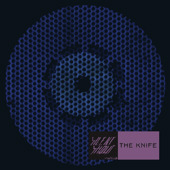 Yes, “Heartbeats” is catchier, but I don’t like my Knife catchy, I like my Knife crazy. “Like a Pen” has an insane beat, insane vocals, an insane video. The latter apparently chronicles the adventures of an anthropomorphic turd, which makes some sense when connected to lyrics that suggest a woman abusing laxatives to stay thin. The overall listening experience is unexpectedly emotive given the relatively minimal spacing of the sound – and, of course, blissfully insane.
7 Camera Obscura, “If Looks Could Kill”, 2006
 I tend to desire musical company when I can’t sleep in the small hours of the morning, which is more often than I’d care to admit. Lately I’ve used the time to pore over Camera Obscura’s latest, 2009’s My Maudlin Career, the way our ancestors were said to pore over Pet Sounds or Revolver. The album somehow manages to grow exponentially better with each listen, and maintains a marvelous flow even while swinging wildly in mood - particularly over the four closing songs, from the pixie-dusted title track to the brutally wistful “Forest and Sands” and “Other Towns and Cities” to the orgasmically blithe “Honey in the Sun”. If My Maudlin Career can be said to have a problem, it’s one most bands would envy: it’s more or less perfectly balanced, too consistently shimmering to have a single song leap off the record quite the way this number from 2006’s Let’s Get Out Of This Country does. Sounding simultaneously like the best 1960’s jangly pop single you don’t remember and uniquely of this decade, uniquely Scottish, “If Looks Could Kill” represents the moment Camera Obscura steps once and for all out of Belle and Sebastian’s delicate shadow and proves itself the superior band.
6 Of Montreal, “The Past is a Grotesque Animal”, 2007
 On paper it sounds like a train wreck: Of Montreal singer Kevin Barnes rants for twelve minutes over a monotonous, four-on-the-floor kick-and-snare drum machine beat, while scatterings of noise blast over a seemingly unchanging chord. The lyrics manage to encapsulate the good and bad of his band’s career in one go: the song title is too long, the story is intensely personal, and the lyrics range from eye-rollingly pretentious (“the first cute girl that I met who could appreciate George Bataille”) to the searingly direct (“we want our film to be beautiful, not realistic”) to the obscure to the point of incoherence (“somehow you’ve red-rovered the Gestapo circling my heart.”) The solo acoustic performance found on YouTube is indeed tedious, but the studio version proves unexpectedly mesmerizing. The robotic “oo-oohs” that underline the vocals starting at the four-and-a-half minute mark bring chills, and when the whole thing finally collapses into what sounds like a car crash played in reverse, I inevitably skip back to the start. Barnes wove this magic consistently through 2007’s mostly wonderful Hissing Fauna, Are You The Destroyer?, then followed it with one of the decade’s most unlistenable albums: 2008’s Skeletal Lamping, like Beck’s career-lowlight Midnite Vultures and Cody Chesnutt’s laughably mistitled Headphone Masterpiece before it, reinforces the immutable law that Prince and only Prince can make Prince records.
5 Radiohead, “Idioteque”, 2000
 Sigh…like choosing Superman as your hero, admiring Radiohead has gotten so danged obvious these days. Sure, they put on an exuberant, exhausting live show, with “Idioteque” perpetually stunning even amidst one brilliant track after another. Yes, they seem like nice enough folks, mostly lacking in rockstar pretensions, politically motivated without preaching from the stage. And their lone stumble, 2003’s unexpectedly mediocre Hail To The Thief, was remedied in 2007 with the career-best In Rainbows – not bad for a group that’s been around fifteen years. Even The Eraser, Thom Yorke’s solo foray into electronica - invariably a kiss of death for most rockers - is positively chilling, a pessimist’s delight. The band doesn’t repeat itself, and gets better all the time; there’s nothing negative to say about Radiohead, but conversely there’s nothing unique to be written. So this sad robotic gem lands in the top five because one Radiohead song has to, but it’s going at the bottom because I can’t get more excited about it. Sorry.
4. Kylie Minogue, “Can’t Get You Out Of My Head”, 2001
3. Hercules and Love Affair, “Blind”, 2008
 |
 |
Ranking the two best dance tracks of the decade, however dissimilar, proves difficult. On one hand you have Kylie as the sensuous android – flawless body, a vocal delivery that’s flat and icy yet impossibly sexy, purring over irresistible supercomputer-generated rhythms. On the other, Hercules and Love Affair spotlights the aching, nakedly vulnerable vocals of Antony, and how brilliantly his voice complements the six-plus minutes of transcendent disco behind it. Kylie’s visit from the space age sounds as effortless as Hercules and Love Affair’s resurrection of seventies disco and early Chicago House, but the soaring final verse of “Blind”, the release felt when the mood of the otherwise despairing vocal finally matches the ebullient sound of the music, pushes the past ever so slightly ahead of the future.
2 Outkast, “B.O.B.”, 2000
 This song feels – is – stunningly original, but I’m not sure this can be attributed to any single characteristic. Other songs feature ridiculously fast rapping, pop culture references with looming expiration dates, a blur of synthesized sixteenth-notes, even chanting, though probably never layered together in such pulverizing fashion. When I woke up one afternoon after nodding off in the backseat and heard this song on the radio for the first time, my thoughts were something along the lines of “Mmphh… huh… what… the… fuck… is… happening?” as though, like a modern-day Rip Van Winkle, I had slept for ages and awoke to the national anthem of some twenty-third century society. The song’s most immediately bizarre element is the chorus, exceedingly relevant – prescient? – yet taking no apparent political stance. Maybe “Bombs Over Baghdad” is meant to describe the way the song sounds? Andre 3000 usually introduced the song as “hip-hop on crack” – when I saw him make this announcement onstage he was shirtless, and wearing breastbone-high pants that appeared to be cut from a pool tarp. If that’s so, hip-hop ought to consider doing more crack next decade.
1 Johnny Cash, “Hurt”, 2002
 Would this song bear the same weight if Johnny and June Carter Cash hadn’t left us so soon after we first heard it? Questions like this are unanswerable; while Roland Barthes’s “Death of the Author” insists on separating the biography of the artist from the meaning of the artwork, it is ironically the author’s death itself that can render this task impossible. Who can say, for instance, how we would experience Nirvana Unplugged In New York had Kurt Cobain lived to see its release, or whether we’re astounded by the Joker or simply mourning Heath Ledger? Cash may not have intended “Hurt” to stand as a metaphor for a cataloging of memories at life’s end, but thanks in no small part to Mark Romanek’s indelible video, it’s difficult to attach any other meaning.
So: here we have the final hit by a man in his seventies, a man whose legend developed mostly between the mid-fifties and late sixties. It’s a recording capable of hushing a crowded room; a song that accomplishes the rare task of improving what was already a very good original, and the even rarer task of presenting a Trent Reznor composition in a way that even my mom would like it. (If you had heard some of the conversations Franny and I had regarding The Downward Spiral, you’d understand how miraculous an achievement that is.) It’s painful, spare, elegant, moving; it’s “Hurt” by Johnny Cash, and it’s far and away the song of the decade.
posted by Anwar Montasir at
9:45 PM
0 Comments


